Introduction
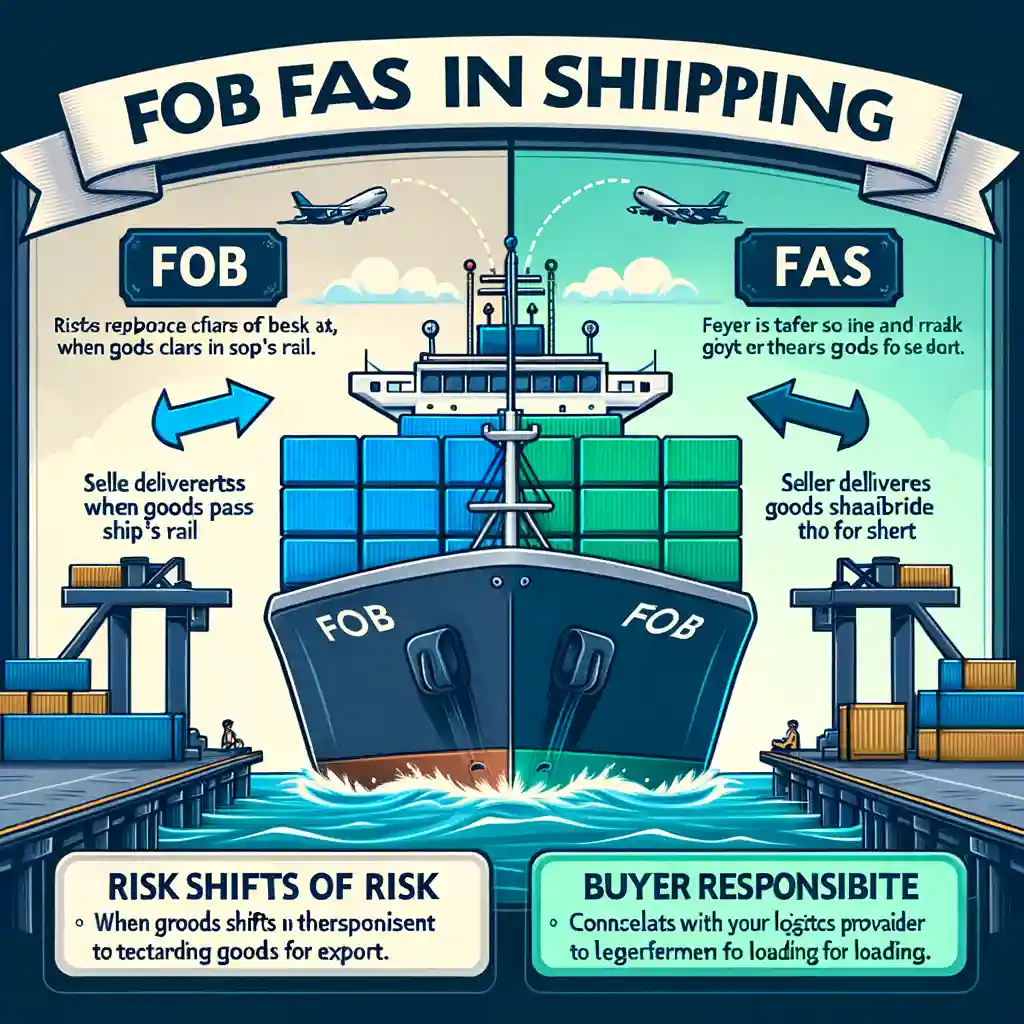
The main difference between FOB and FAS Incoterms lies in how each term assigns export risk between the buyer and the seller. FAS places goods alongside the vessel, while FOB places goods onboard the vessel. Understanding this difference helps companies make smarter shipping decisions. Gateway Logistics guides businesses through these terms so they can choose the right Incoterm and move their goods with confidence. Our goal is to simplify global trade and help you ship smarter, faster and more efficiently.
What Are Incoterms (FOB and FAS)?
Incoterms are international commercial terms created by the ICC to define responsibilities between buyers and sellers in global trade. These rules outline who handles transportation, customs, documentation and risk. Since their introduction in 1936, Incoterms have helped regulate international shipments and provide clarity in contracts. Anyone involved in global trade must understand these terms before finalizing international deals.
What Is FAS (Free Alongside Ship)?
FAS defines the point where the seller hands over responsibility. The seller delivers the goods to the port and places them alongside the vessel chosen by the buyer. Once the goods reach the port and are positioned next to the ship, the buyer takes responsibility for loading the cargo and managing all further risks. The buyer must also select the loading port and organize loading arrangements.
Advantages of FAS
FAS reduces the seller’s responsibilities because the seller only needs to deliver the goods to the port. The buyer gains full control over the vessel, loading process and transportation. This approach benefits buyers who want flexibility in choosing the ship, cargo type and shipping schedule. It also allows the buyer to supervise the shipment from the moment the goods arrive at the port.
Disadvantages of FAS
FAS can cause delays when ships arrive late or miss their loading window. Goods may sit in the port and risk damage or spoilage. Poor coordination from the buyer can also delay dock receipts and other documents, which forces the seller to resolve issues and incur extra costs. These delays increase stress, expenses and operational complications for both parties.
What Is FOB (Free On Board)?
FOB assigns responsibility to the seller until the goods are loaded onboard the vessel. Once the goods cross the ship’s rail, the buyer assumes all risks. The port or dock does not influence the transfer point. The seller must deliver the goods to the ship on time, prepare export clearance and handle loading.
Advantages of FOB
FOB gives buyers strong advantages. Sellers handle loading and initial transportation, which removes major burdens from the buyer. Buyers can also choose the shipping company and decide how the goods move after loading. Additionally, freight and customs costs are usually pre-estimated, helping buyers avoid unexpected expenses.
Disadvantages of FOB
FOB can increase the product’s initial purchase price because sellers include higher shipping and preparation costs. This can make it harder for buyers to predict the final total cost. In many cases, buyers end up paying more overall due to these built-in charges.
FOB vs FAS: Key Differences
FOB works best for containerized shipments because sellers can load goods directly into containers and onto the vessel. FAS is more suitable when goods are not containerized, or when the buyer needs more control over the loading process. Bulk cargo, oversized goods and customized loading situations often favor FAS. Buyers must also compare freight cost structures, control preferences and risk levels when choosing between these two Incoterms.
Common Misconceptions About FOB and FAS
Misconceptions About FOB
Many believe that FOB makes the seller responsible until the goods reach the destination port. In reality, the seller’s duty ends once the goods are loaded on the vessel at the origin port. Another misconception is that FOB works for all transport modes. It applies only to sea and inland waterway shipping.
Misconceptions About FAS
Some think FAS ends the seller’s responsibilities once the goods leave the seller’s premises. In fact, the seller must deliver the goods to the named port and place them alongside the ship. Others assume the seller loads the goods under FAS, but loading is the buyer’s responsibility.
Understanding these misconceptions helps businesses avoid disputes and costly errors.
How to Choose Between FOB and FAS for Shipping From China
Consider the nature of your goods. Bulk or oversized goods often benefit from FAS because buyers can manage loading based on vessel timing. Containerized cargo usually fits FOB better, as sellers handle loading directly into containers.
Evaluate risk allocation. Under FOB, risk transfers when goods load onboard. Under FAS, risk transfers when goods sit alongside the vessel. Buyers who prefer control choose FAS, while buyers who want the seller to handle loading choose FOB.
Always review the full terms and ask for expert guidance when necessary.
Real-World Example of FOB and FAS
A Chinese toy manufacturer sells toys to a U.S. retailer under FOB terms. The seller transports the toys to the port, clears them for export and loads them onto the vessel. As soon as the toys cross the ship’s rail, the risk shifts to the buyer. The buyer then manages the transport from China to the United States. This example shows how responsibility shifts under FOB and how the terms work in practice.
Future Trends in Using FOB and FAS
Global trade continues to evolve. Digitalization and automation are influencing how Incoterms function. Blockchain technology may streamline documentation, and smart contracts may automate risk transfer. Sustainability goals may also affect Incoterm choices. Businesses may choose FAS if it aligns better with lower carbon-footprint shipping. Geopolitical shifts and new trade regulations will also influence how companies choose between FOB and FAS in the future.
Our Services
Gateway Logistics provides professional shipping services from China and supports all major Incoterms. We offer reliable DDP services, secure delivery and high-quality logistics solutions. Clients can use our website contact form for more information.
Understanding Incoterms like FOB and FAS helps companies reduce risk, avoid confusion and manage global shipments effectively. As international trade grows, learning how these terms work becomes essential for success.
FAQ
What does FOB mean?
FOB means Free On Board. The seller loads the goods onto the vessel nominated by the buyer.
What is the main difference between FOB and FAS?
FOB transfers risk once goods are onboard. FAS transfers risk once goods are placed alongside the ship.
What are the advantages of FAS?
FAS reduces seller responsibility and gives the buyer more control over the shipping process.
Can FOB and FAS apply to all transport modes?
No. They apply only to sea and inland waterway transport.
Why do Incoterms get updated?
Updates keep Incoterms aligned with global trade practices.
What are the disadvantages of FOB?
FOB often increases the product’s upfront cost because sellers include shipping expenses in the price.
How do FOB and FAS affect freight costs?
Under FOB, freight costs are usually included in the product price. Under FAS, buyers arrange and pay for main carriage.
What are buyer responsibilities under FOB?
The buyer arranges transport, pays freight charges and handles customs at the destination.
Who decides whether to use FOB or FAS?
Both parties decide together based on product type, risk preference and cost.
When is FAS better than FOB?
FAS suits buyers who want more control or who ship oversized cargo that requires customized loading.
Can Incoterms be modified?
Yes, if both parties agree and clearly document changes in the contract.